Governor of the Central Bank of Libya Participates in the International Monetary and Financial Committee Meeting to Discuss Financial Stability and Artificial Intelligence Challenges


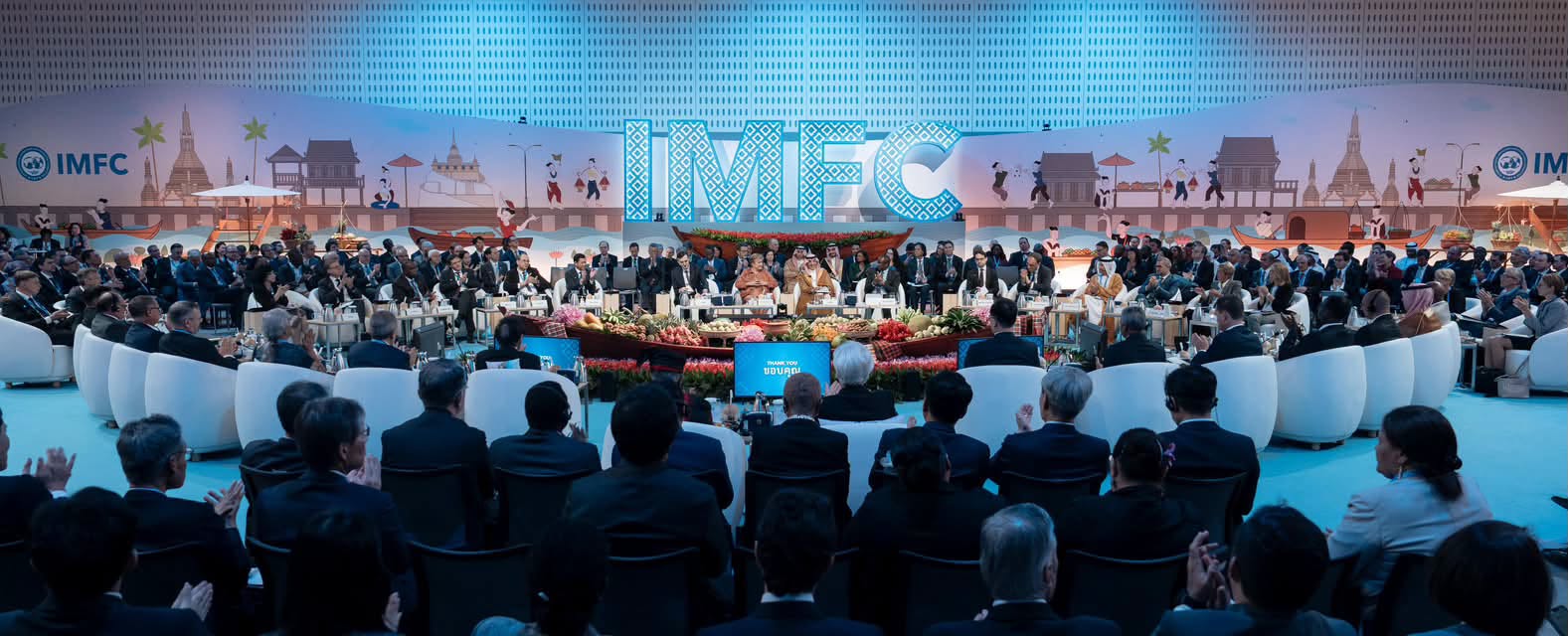
Governor of the Central Bank of Libya, H.E. Naji Mohammed Issa, participated on Saturday, October 17, 2026, in the official meeting of the International Monetary and Financial Committee (IMFC) as part of the Annual Meetings of the International Monetary Fund and the World Bank in Bangkok, Thailand. The session was attended by the Managing Director of the IMF, Ms. Kristalina Georgieva, alongside central bank governors, finance ministers of member states, and senior officials of international financial institutions.
The meeting’s proceedings and discussions addressed major global economic challenges, most notably the repercussions of energy and supply shocks, inflationary pressures, rising debt levels and financing costs, and ways to enhance the resilience of economies and financial systems against shocks.
The statement issued by the Committee emphasized that central bank independence is essential for monetary policy credibility and anchoring inflation expectations. It stressed the importance of addressing fiscal imbalances and strengthening fiscal sustainability within credible medium-term frameworks, while safeguarding the most vulnerable populations and growth-prioritized investments.
Artificial intelligence and its implications for the economy and financial institutions emerged as a key focus of the meeting, encompassing the opportunities it offers to boost efficiency and productivity, alongside the associated risks that necessitate the development of regulatory frameworks, governance, and financial infrastructure protection. In this context, the statement welcomed the “Bangkok Blueprint” aimed at strengthening digital finance safeguards, enhancing resilience against cyber threats, and intensifying international cooperation to combat digital fraud.
Discussions also covered strengthening the robustness of financial systems, managing liquidity risks and foreign currency exposures, expanding private sector financing opportunities, and developing the IMF’s surveillance, technical assistance, and capacity-building programs, including efforts against money laundering and corruption.
The Governor’s participation holds special significance as these priorities lie at the core of the Central Bank of Libya’s responsibilities in preserving monetary and financial stability amid political and institutional division. Furthermore, it provides an opportunity to exchange expertise and identify areas of cooperation with the IMF and central banks to develop monetary policy and banking supervision tools, secure the expansion of electronic payments, and strengthen compliance and digital transformation risk management, thereby bolstering confidence in the Libyan banking sector.