Author: ls
The Central Agency of Legitimacy Supervision cooperating with the CBL Advisory committee on Islamic Banking arranged a workshop on Tuesday morning the 18th of October 2016 at the Alwedan Hotel concerning “Evaluating the Transitional role of Islamic Banking in the Libyan Banking Sector (Reality and prospects).”
The workshop was inaugurated with a speech by the Director of the Central Agency of Legitimacy Supervision, confirming that the enterprise of Islamic Banking is a national project that aims to please God and his messenger. The expectation for transformation was considered to be speedy, but unfortunately the current circumstances prevented this from being accomplished.
The Head of the Advisory Committee of Islamic Banking, confirmed in his speech the efforts that have been made for the transformation process, according to Banking Law No.(1) for 2005 and under Law No.(46) for 2012. The committee is working on forming a strategy for Islamic Banking in Libya in cooperation with a team of experts from the World Bank which will be ready in the coming days to be displayed for all concerned parties especially commercial banks.
The Head of the Advisory Committee of Islamic Banking made the speech to the Governor of the Central Bank of Libya, addressing the transformation vision of the Central Bank of Libya and focusing on the development and building of capabilities first. Also emphasized, the Libyan banks will keep up with the work of other countries and will manage to provide the best banking services to the Libyan people pointing out the challenges facing the banking sector during the lack of security and during these extraordinary political conditions that affect the daily life and the banking services sector in particular.
The Attendees pointed out that the workshop objectives is to define the reality of the banking sector in Libya and the contributions of Islamic finance. Also pointed out is the role the other relevant authorities in the success of the transition to Islamic Banking and also the diagnostic trouble to identify particular difficulties being faced as well as discussing the solutions. It was proposed to overcome the difficulties through seeking coordination with the competent authorities internationally in addition, gaining knowledge from the experience of the Libyan banks and sharing this local experience and expertise between banks by identifying:
– The Transformation requirements for each bank.
– Efforts for the success of the transformation.
– Difficulties facing the process of transformation.
Two sessions of work were held during the workshop. The first session was chaired by Head of the Advisory Supervisory Commission of the Central Bank of Libya. Addressed was the role of the Commission and its relation with the Advisory Supervisory Commission of commercial banks according to Banking Law No.(1) for 2005, amended by Law No. (46) for year 2012 and the mandated circulars issued by the Board of the Central Bank of Libya. The following was discussed:
– Paper on Sahari Bank (Evaluate the transformation to Islamic Banking).
– Paper on North Africa Bank (Evaluating the Transformation to Islamic Banking).
– Paper on United Bank
The second session was chaired by Head of the Advisory Committee of Islamic Banking, which has discussed a number of working papers submitted according to the following:
– Paper on Central Agency of Advisory Supervision.
– Paper on Jumhuria Bank (steps of transformation to Islamic Banking).
– Paper on National Commercial Bank (the transformation plan of the NCB bank).
The second session was chaired by the Head of the Advisory Committee of Islamic Banking, to discuss working papers presented:
– Paper on Sahari Bank (Evaluate the transformation to Islamic Banking).
– Paper on North Africa Bank (Evaluating the Transformation to Islamic Banking).
– Paper on United Bank
The workshop closed by a long discussion and the most important recommendations of the meeting were noted.
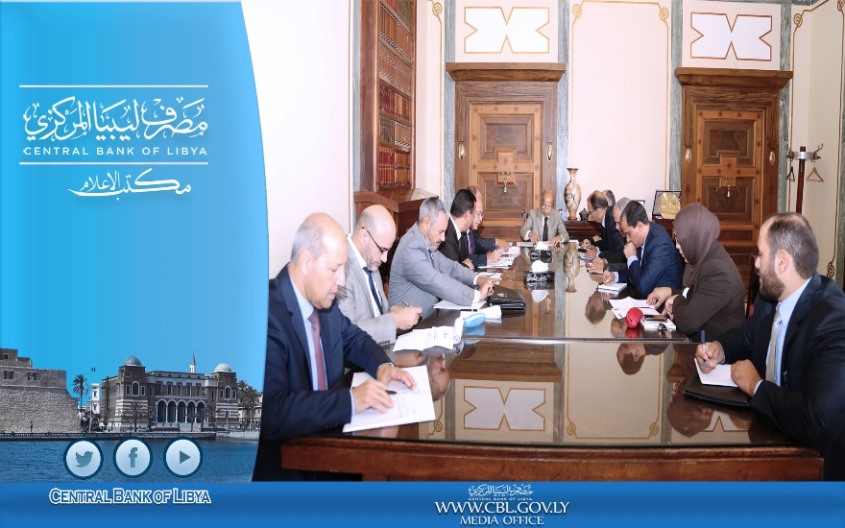
The Central Bank of Libya held a meeting concerning the Regulations for dealing with personal bank accounts in the banking system
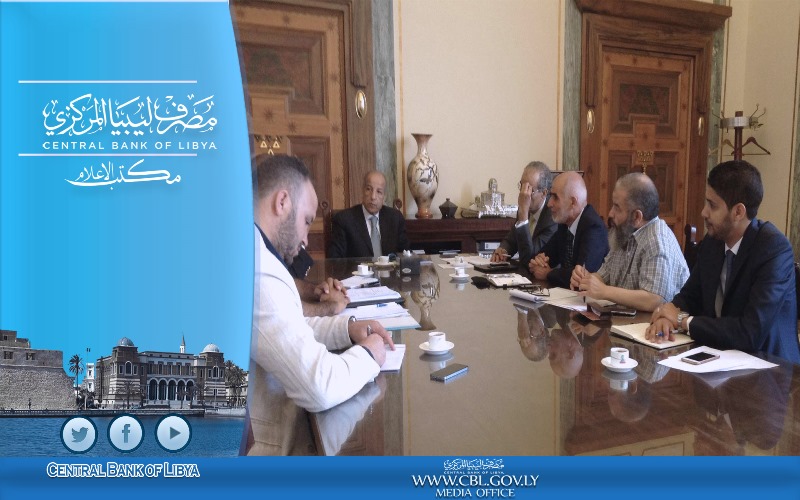
Mr. Saddek Omar Elkaber, Governor of The Central Bank of Libya, held a meeting on Thursday morning the 13th of October 2016 to discuss the executive procedures for dealing with clients that desire complete secrecy for their personal accounts. This meeting was attended by Directors of the Supervision Department of the Central Bank of Libya, the main Financial Information Unit, Director of the Legal Department, the Banking Operation Department, Information Security Department, Manager of the Service Provider Center of the Central Bank of Libya, the General Manager of Jumhuria Bank and the Director of the Technical Department of Jumhuria Bank. They agreed during the meeting to start this feature for clients of Jumhuria Bank which is one of the biggest banks and it will be rolled out to the rest of the banks in the coming days.
The closing day of the workshop of systems and methods on combating money laundering and terrorism financing
On Wednesday the 8th of September 2016 at the Radisson Blue Hotel was the closing day of the workshop of systems and methods on combating money laundering and terrorism financing. The workshop was under the supervision of the Financial Information Unit of the Central Bank of Libya in Tripoli with participation from the Prosecutor’s Office and prominent specialized professors in the field of money laundering and auditing.
Dr. Sobhi Misbah, Head of the main Financial Information Unit of the Central Bank of Libya in Tripoli, stated to the Media Office of the Central Bank of Libya the following:
“this workshop has two aims, one is direct and the other aim is strategic:
The direct aim is to define the crime of money laundering and terrorism financing, identify the sectors in these crimes, the punitive measures the law has established, the disclosure procedures by the concerned institutions and the dangerous repercussions on the national economy. Also, to find a mechanism for efficient coordination among the relevant actors that are responsible to initiate the law. We could say that we reached this goal with coordination between the Financial Information Unit of the Central Bank of Libya and the Prosecutor’s Office.
For the strategic aim, we stressed the importance of the mutual evaluation that Libya will be subjected to in the middle of 2017. We have presented during the workshop a presentation that clarifies the importance, necessity, requirements, and the repercussions or the results of this evaluation concerning the identified institutions.
In conclusion the workshop concluded the following recommendations:
1 – Form a committee with members from the Financial Information Unit, the Prosecutor’s Office, other authorities responsible for enforcing the law of money laundering and including professors specialized in studying the field of money laundering and terrorism financing before being presented to the legislature. Until the adoption of the law, we can rely on the resolutions and the publications issued by the Governor of the Central Bank of Libya and implement the international recommendations regarding money laundering and terrorism financing policies.
2 -Develop public policies to target money laundering and terrorism financing according to international standards and the transmission to operational procedures with effective supervision.
3 -Arrange meetings and workshops that include general managers of financial institutions and managers of the supervisory authorities to achieve the knowledge and effectiveness for the mutual evaluation.
4- Enhance the communication between the Financial Information Unit, the Prosecutor’s Office and all the concerned authorities in enforcing international legislation on money laundering and terrorism financing.
5- Focus on specialized training for money laundering and terrorism financing for all employees, observers, information sub units and the main Financial Information Unit.
6- The necessity to put standards for managers and the employees of the sub-units of the commercial banks besides the main Financial Information Unit.
7 – The Customs representative recommended two very important things.
First: The need to incorporate statistical figures in the bill of lading.
Second: To complete the access of custom disclosure statements and recommended that there should be an active role for commercial banks to not accept any customs declarations for the items that are not accepted by the General Administration of Customs.”
A workshop on Systems and Methods on Combating Money Laundering and Terrorism Financing
The Central Bank of Libya arranged a workshop on Monday morning the 5th of September 2016 on systems and methods on combating money laundering and terrorism financing in cooperation with the Public Prosecutor’s Office. Research papers on money laundering were presented as an example to show how to deal with criminal liability.
The workshop, that will continue for another three days was attended by members of the Public Prosecutor’s office, managers of money laundering subunits at commercial banks, representatives from the Audit Bureau, Ministry of Justice and Anti-corruption Commission besides others interested in this matter.
Dr. Mostafa Alarbi (Professor of Criminal Law at the University of Mirqab), Prosecutor Mr. Mohamed Yehya, Mr. Sobhi Zayed (Director of the Main Financial Information Unit of the Central Bank of Libya) and Mr. Mohammed Alshaeri (Deputy Director of the Main Financial Information Unit) presided over the first session of the workshop. The first research paper which was presented by Dr. Mostafa Alarbi discussed the concept and conduct on the crime of money laundering, the specific patterns to commit a money laundering crime, the criminal intent that is required, and accountability.
Governor of the Central Bank of Libya meets with the companies of the cement industry to facilitate the process of granting letters of credit and improve local production
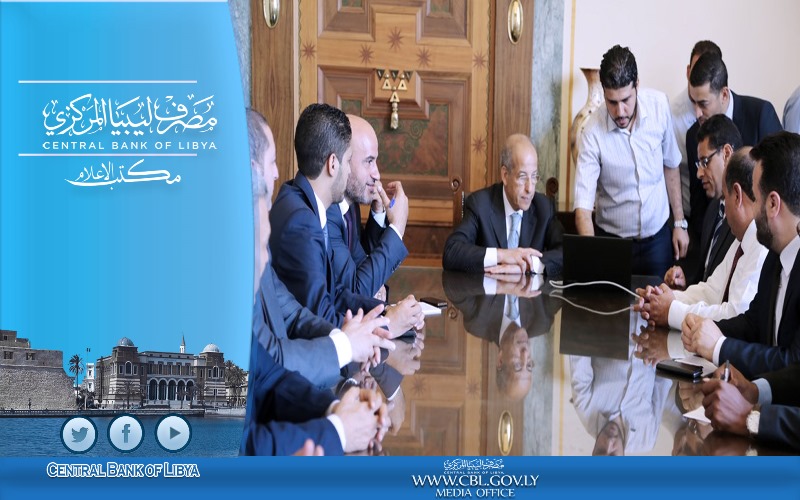
In the framework of overcoming the difficulties for companies of the cement industry, Governor of the Central Bank of Libya held a meeting on Monday morning the 15th of August with a number companies of the cement industry. During the meeting they discussed the procedures that impede the increase of production and how to simplify and streamline the procedures to increase production of cement.
The Central Bank of Libya announced the launch of the libyan swift service
On Monday morning the 15th of August 2016 the Governor of the Central Bank of Libya, Mr. Saddek Omar Elkaber, and directors of the departments of the Central Bank and the technicians that accomplished the project attended a meeting to commence the launch of the new Libyan Swift System directly linked with the Global SWIFT Association for the first time without going through a third party, which promotes independence and national sovereignty. A main data center and a backup system was established according to the highest level of international standards approved by the World Association of Swift which ensures the continuity of providing services to the Central Bank of Libya, commercial banks and Libyan financial organizations.
Governor of the Central Bank of Libya meets with the Turkish Ambassador in Libya.
Governor of the Central Bank of Libya Mr.Saddek Omar Elkaber held a meeting on Thursday morning the 11th of August at his office in Tripoli with Mr.Ahmed Jogan the Tirkish Ambassador in Libya.During the meeting they discussed economic and financial issues of common interest.
Fragility of the State of Libya according to international indicators of fragility report of year 2016
The source of the following Report is Fund for Peace Organization
State Fragility 2016:
– Fragility Index: 96.4
– Fragility level: Alert
– 25th Most Fragile State
Decade Trends: 2007 – 2016
– Decade change: +27.1
– Level: Critical Worsening
– The most worsening state
Breakdown of State Fragility Index for Libya:
| Ranking (Fragility + Risks) | 25th |
| Fragility Indicator Scores | (0-10) |
| Demographic Pressures | 5.1 |
| Refugees and IDPs | 8 |
| Uneven Economic Development | 8.3 |
| Group Grievance | 6.5 |
| Human Flight & Brain Drain | 5.8 |
| Poverty & Economic Decline | 8 |
| State Legitimacy | 9.5 |
| Public Services | 7.2 |
| Human Rights & Rule of Law | 9.3 |
| Security Apparatus | 9.6 |
| Factionalized Elites | 9.4 |
| External Intervention | 9.7 |
| Total | 96.4 |
Oil Won’t Save Libya
The source of the following article :nationalinterest.org
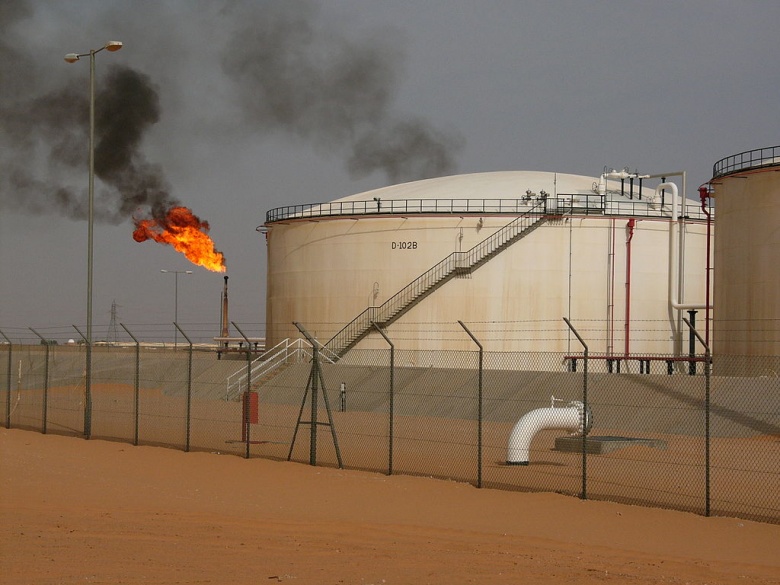
As political opponents of the Democratic presidential nominee often note, crisis has paralyzed Libya since 2011. To be sure, a power vacuum erupted after dictator Muammar el-Qaddafi’s death, opening the door to a political free-for-all, warring militias, and ISIS. Amidst the ensuing conflict, some hang their hopes on Libya’s greatest natural resource: oil. Ten years ago, over 60 percent of Libya’s GDP came from oil revenues. Today, after years of civil war and falling oil production, this number has been nearly halved. Under effective management, pumping more oil might ensure a successful democratic transition under the fledgling Government of National Accord in Tripoli. Certain realities—ranging from dilapidated oil wellheads to ISIS—undercut the prospects of such oil-fueled progress. Even without these obstacles, betting big on oil could prove disastrous. There is a road to peace in Libya, but it isn’t awash with petroleum.
Libya is precariously split between several factions vying for control. The UN-backed Government of National Accord, also called the unity government, formed in early 2016 and operates from Tripoli. The GNA faces an opposition body based in Tobruk, which collaborates with General Khalifa Hifter and his Libyan National Army (LNA). A third group, located south of Sirte, includes the remnants of the General National Congress (GNC) and several Islamist groups. Other unassociated militias hold territory across the country, including ISIS. Before Qaddafi’s undoing in 2011, Libya produced over 1.6 million barrels of oil per day, which generated most government revenues. Today, the country’s output is less than a quarter of that level—the oil sector is in shambles.
Citi On Libyan Oil Deal: It’s A “Headfake”
The source of the following article :oil price.com
Libya’s National Oil Corporation (NOC) announced a political breakthrough a few days ago, promising to ramp up production and exports of long-disrupted oil supplies. The NOC said that exports could jump from 300,000 barrels per day to 900,000 barrels per day by the end of the year. If that came to pass it would be very bearish for international oil prices.
But very few people are buying such a scenario. Bloomberg surveyed six oil traders and found zero confidence in a return of Libyan oil from their responses. Three of the six traders said no new shipments would leave Libya’s newly opened ports in the next few months. Two others said the deal would break down. And the last said that even if some new exports started up, it would be in trivial amounts.
Citigroup backed up that sentiment in an August 2 report, calling the new announcement from Libya’s NOC just “another headfake.” Libya has promised several times to bring oil back, issuing declarations that oil ports would open and exports would resume. But there isn’t a single political entity that has the sway to make all of the country’s parts move in the same direction. Libya “has devolved into a genuine failed state, run by competing militias, and moving a state from the failed to the not failed column does not happen overnight or over months. It takes years,” Citi analysts wrote.
Related: Pioneer’s $2 Operating Costs: Fact Or Fiction?
That means that the promised return of 600,000 barrels per day from the North African OPEC member before the end 2016 probably won’t happen. Along with the outages in Nigeria, which Citi expects to persist, the supply disruptions that helped spur the oil price rally in the second quarter could remain in effect for quite some time. That provides a glimmer of hope for a rebound in oil prices.
Oil markets are still oversupplied and suffering from record levels of inventories, a glut of refined products and crude oil that have pushed oil into bear market territory once again. These factors will weigh on oil prices, Citi says, “[b]ut oil at $40 a barrel is likely to spur investor, commercial and physical demand.”
By Charles Kennedy
Governor of the Central Bank of Libya meets with the British Ambassador in Libya
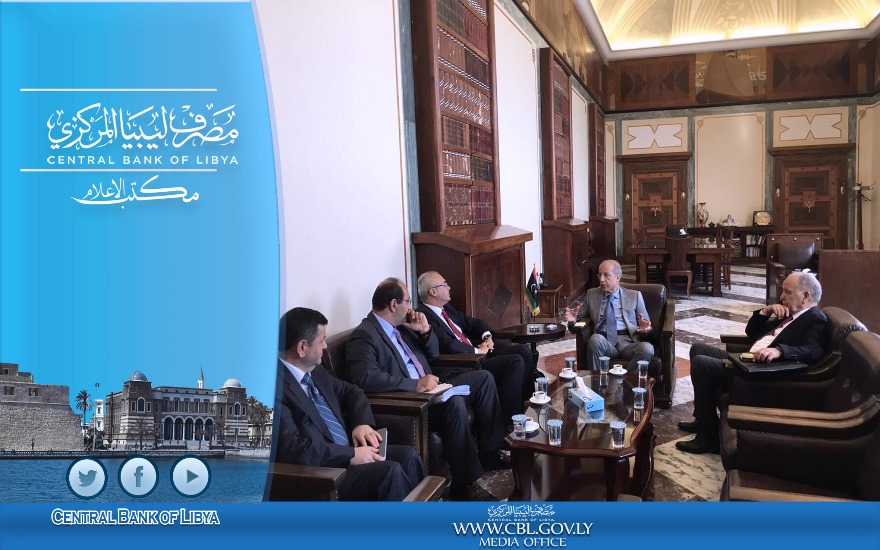
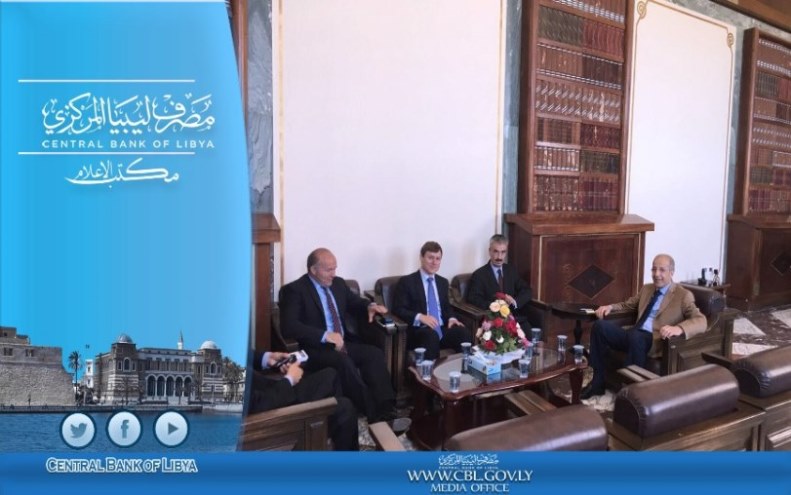
Governor of the Central Bank of Libya, Mr. Saddek Omar Elkaber, held a meeting on Monday morning the 8th of August at his office in Tripoli with Mr. Peter Millet, the British Ambassador for Libya. During the meeting they discussed economic and financial issues of common interest.
Governor of the Central Bank of Libya meets with Chargé d’affaires of the Italian Embassy in Libya
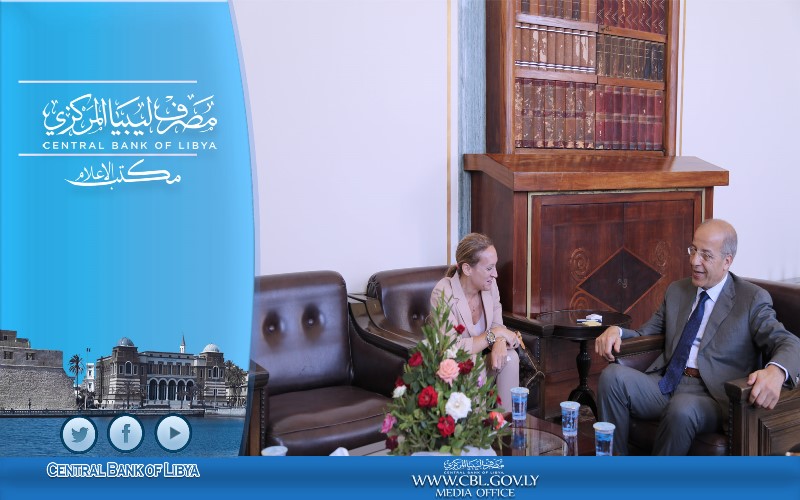
Governor of the Central Bank of Libya Mr.Saddek Elkaber held a meeting at his office in Tripoli on Tuesday morning the 2nd of august with Mrs.Andrina Marthela Chargé d’affaires of the Italian Embassy in Libya .During the meeting they discussed economic and financial issues of common interest.