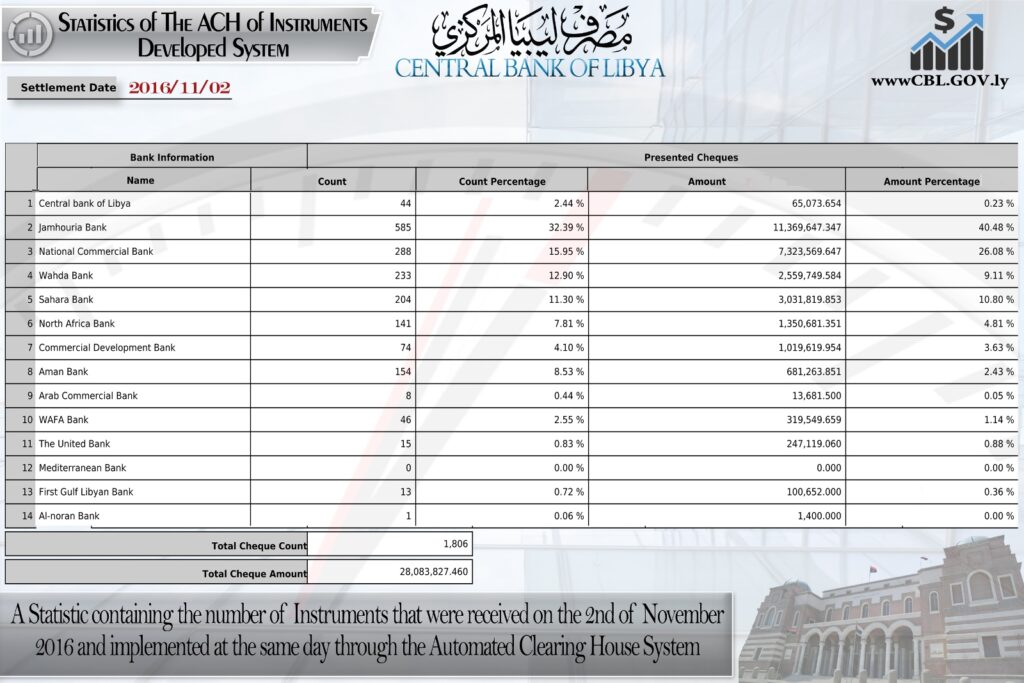
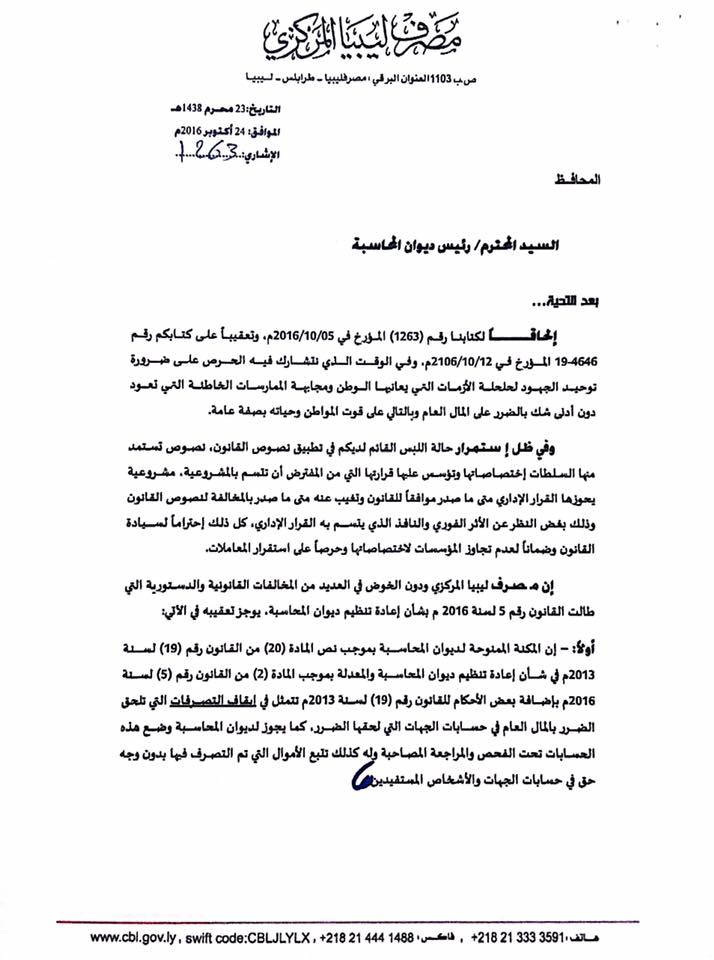
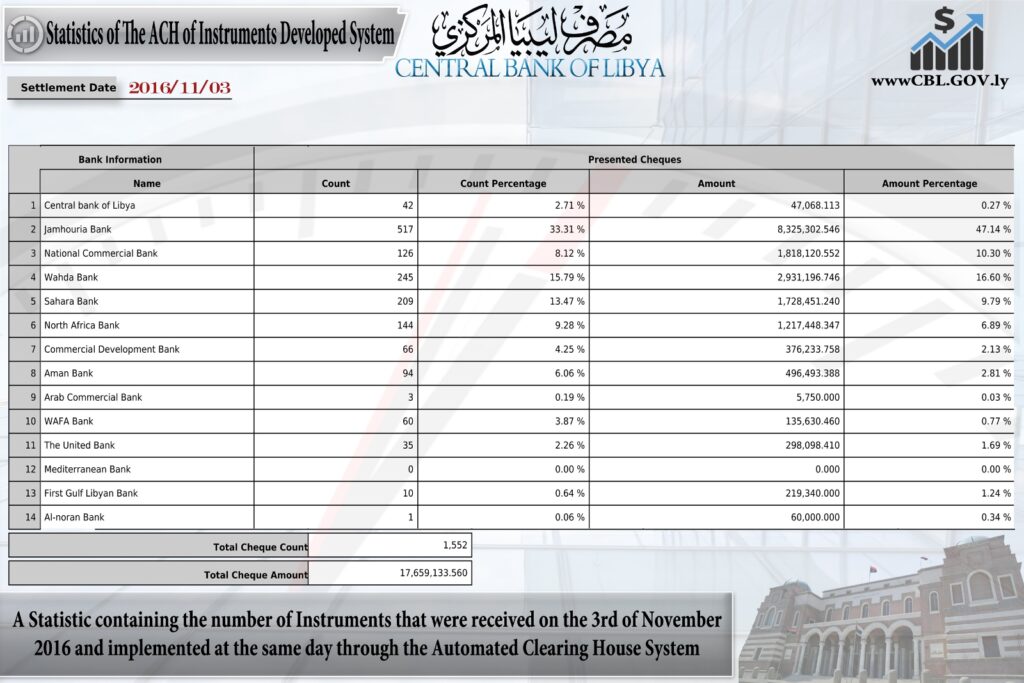
A Statistic containing the number of Instruments that were received on the 3rd of October 2016 and implemented at the same day through the Automated Clearing House System



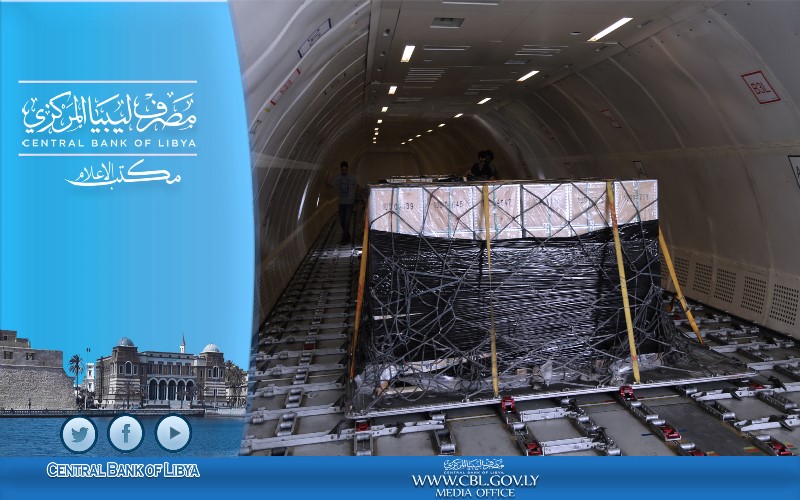
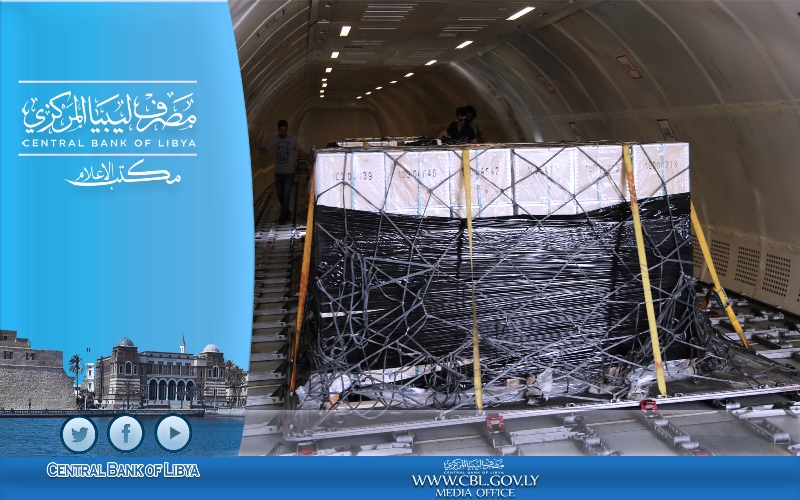 The Central Bank of Libya received on Wednesday afternoon 26th of October 2016 a new shipment of Libyan paper currency which arrived at Matega airport from Britain .
The Central Bank of Libya will distribute the shipment to the commercial banks to all regions of Libya
The Central Bank of Libya received on Wednesday afternoon 26th of October 2016 a new shipment of Libyan paper currency which arrived at Matega airport from Britain .
The Central Bank of Libya will distribute the shipment to the commercial banks to all regions of Libya

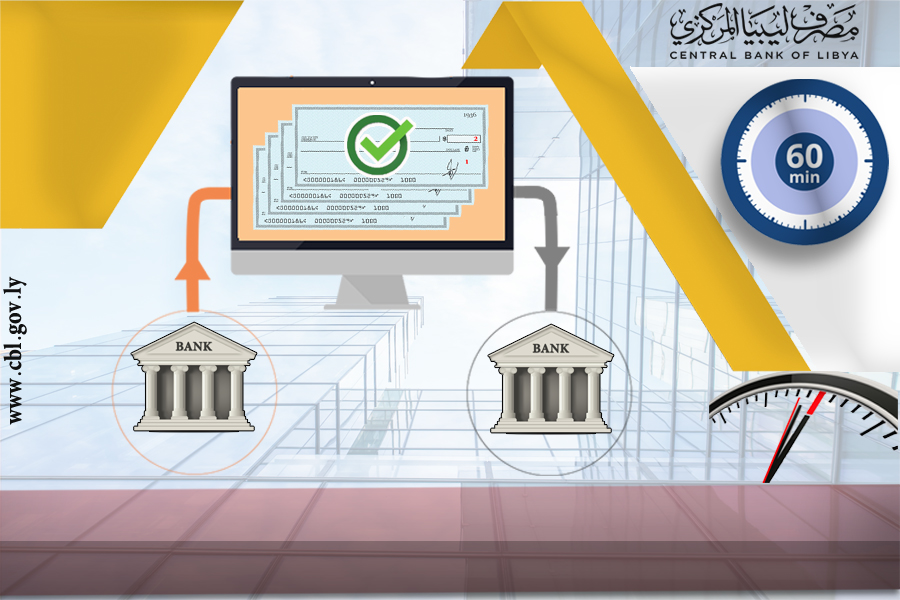 The Central Bank of Libya began working on the developed system of Automated Clearing House of Instruments on Monday morning the 24th of October 2016 as part of the plan put to develop the national payment system. This developed system allows the instrument to be registered in an hour or at maximum during the same day, in all commercial banks and their branches which are connected to the system provided by (Progress Soft Company).
This project was launched in September 2015 and started effectively working in 2016. This project faced many difficulties due to the current circumstances in the country. The Central Bank of Libya and a number of commercial banks in Libya selected the system of Automated Clearing House of Instruments to combine with their central banking systems in which facilitates the Automated clearing house cycle, that is faster, more secure, automated and efficient.
The Libyan Banks and their branches will benefit from many advantages by using this system, the most important advantage of operational risk will be reduced and the process of exchanging instruments will be more secure by allowing follow-up and tracking of the exchange of instruments between the banks participating in the system. In addition this system applies the latest security policies, saving time and effort by centralizing the processing between banks connected to the system.
Also, this electronic system provides reports and statistics to facilitate the review and audit of all operations of bank branches by the Central Bank of Libya. The implementation of the electronic clearing system of instruments will help the banks in Libya to finalize the role of clearing instruments faster and contribute to the acceleration of the cash in circulation and positively affect the national gross of Libya.
The Central Bank of Libya began working on the developed system of Automated Clearing House of Instruments on Monday morning the 24th of October 2016 as part of the plan put to develop the national payment system. This developed system allows the instrument to be registered in an hour or at maximum during the same day, in all commercial banks and their branches which are connected to the system provided by (Progress Soft Company).
This project was launched in September 2015 and started effectively working in 2016. This project faced many difficulties due to the current circumstances in the country. The Central Bank of Libya and a number of commercial banks in Libya selected the system of Automated Clearing House of Instruments to combine with their central banking systems in which facilitates the Automated clearing house cycle, that is faster, more secure, automated and efficient.
The Libyan Banks and their branches will benefit from many advantages by using this system, the most important advantage of operational risk will be reduced and the process of exchanging instruments will be more secure by allowing follow-up and tracking of the exchange of instruments between the banks participating in the system. In addition this system applies the latest security policies, saving time and effort by centralizing the processing between banks connected to the system.
Also, this electronic system provides reports and statistics to facilitate the review and audit of all operations of bank branches by the Central Bank of Libya. The implementation of the electronic clearing system of instruments will help the banks in Libya to finalize the role of clearing instruments faster and contribute to the acceleration of the cash in circulation and positively affect the national gross of Libya.

 The Research and Statistics Department of the Central Bank of Libya released statistics that contain the financial developments of the commercial banks in Libya during the period of 2008 to the second quarter 2016 that include many statistical tables and graphics that show the safety of the Banking system, in the following:
1 – Commercial Banks:
– Bank Branches
– The structure or ownership in commercial banks
– Banking Intensity
– Focus
2 – The assets and liabilities of commercial banks:
– The sources of funds in commercial banks
– The uses of funds in commercial banks
3 – Indicators of the performance of the commercial banks in Libya:
– Indicators of Liquidity
– The quality of assets
– profitability indicators
– Equity capital indicators
for more details check the following link ( the file is available in Arabic only)
The financial indicators of the second quarter of year 2016
The Research and Statistics Department of the Central Bank of Libya released statistics that contain the financial developments of the commercial banks in Libya during the period of 2008 to the second quarter 2016 that include many statistical tables and graphics that show the safety of the Banking system, in the following:
1 – Commercial Banks:
– Bank Branches
– The structure or ownership in commercial banks
– Banking Intensity
– Focus
2 – The assets and liabilities of commercial banks:
– The sources of funds in commercial banks
– The uses of funds in commercial banks
3 – Indicators of the performance of the commercial banks in Libya:
– Indicators of Liquidity
– The quality of assets
– profitability indicators
– Equity capital indicators
for more details check the following link ( the file is available in Arabic only)
The financial indicators of the second quarter of year 2016

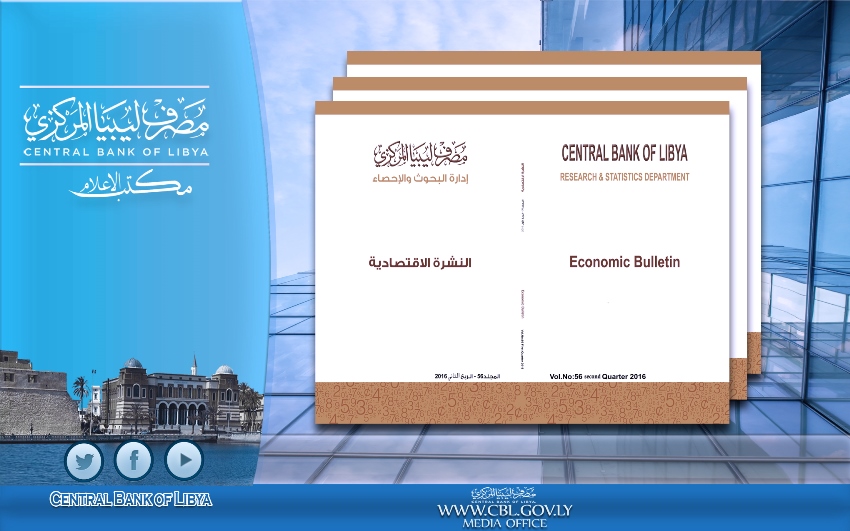 The second quarter of the Economic Bulletin for year 2016 was recently released and it is the 56th issue of the economic bulletin by the Research and Statistics department of the Central Bank of Libya which contains statistic tables, graphs and time series on monetary and economic data, most importantly the following is included:
1 – Monetary and Banking statistics including:
– Money Supply
– Monetary Base
– Assets and Liabilities of Commercial Banks
– Loans and Facilities
– International Reserves
– Monetary Survey
2 – Public Finance Statistics:
– Revenues
– Expenses
3 – Balance of Payments and Foreign Trade:
– Imports and Exports
– Libyan Dinar Exchange Rates
4 – The Development of Production and Prices:
– GDP at constant prices
– GDP at current prices
– Inflation Rate
5 – Oil and Gas Production:
– Crude Oil Exports
– Gas and Petrochemical Oil Derivatives
– The average selling price of crude oil
The second quarter of the Economic Bulletin for year 2016 was recently released and it is the 56th issue of the economic bulletin by the Research and Statistics department of the Central Bank of Libya which contains statistic tables, graphs and time series on monetary and economic data, most importantly the following is included:
1 – Monetary and Banking statistics including:
– Money Supply
– Monetary Base
– Assets and Liabilities of Commercial Banks
– Loans and Facilities
– International Reserves
– Monetary Survey
2 – Public Finance Statistics:
– Revenues
– Expenses
3 – Balance of Payments and Foreign Trade:
– Imports and Exports
– Libyan Dinar Exchange Rates
4 – The Development of Production and Prices:
– GDP at constant prices
– GDP at current prices
– Inflation Rate
5 – Oil and Gas Production:
– Crude Oil Exports
– Gas and Petrochemical Oil Derivatives
– The average selling price of crude oil